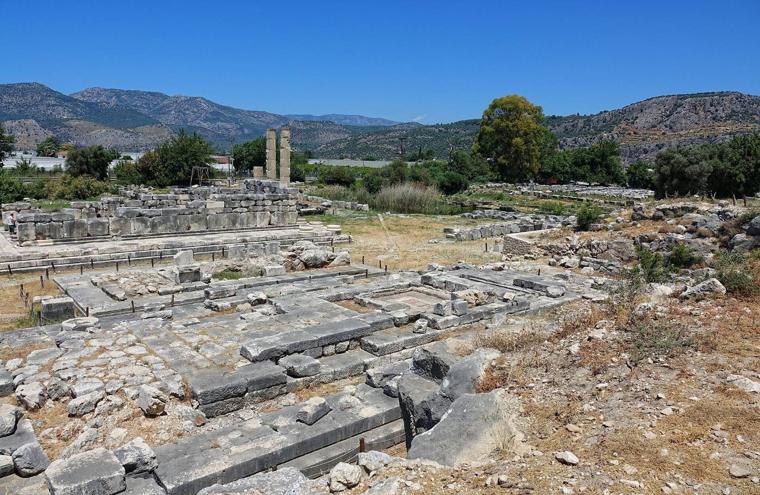
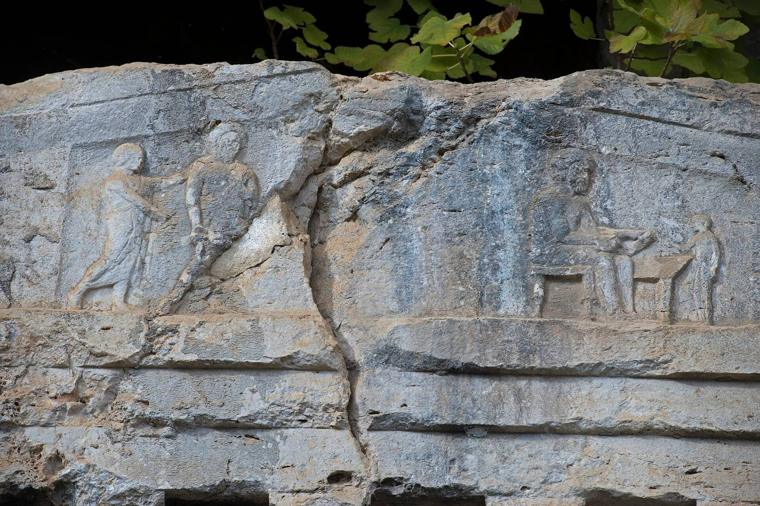
Temple-fronted Lycian rock tombs above central Fethiye.
Overview
Carved into the cliffs behind Fethiye and visible from many parts of town, the Tomb of Amyntas is one of the area’s most striking sights. Its temple-style facade, with two Ionic columns and a triangular pediment cut into the sheer rock, ranks among the grandest examples of Lycian tomb architecture. A climb up the steps rewards you with wide views over Fethiye Bay and the harbour, magical at sunset.
History
The tomb belongs to ancient Telmessos, the city on whose site Fethiye now stands, and dates from the 4th century BC. A Greek inscription on the facade names it as the tomb of ‘Amyntas, son of Hermagios’; little is known about him, but he is thought to have been a member of the local elite. Unlike traditional Lycian tombs imitating timber houses, it draws on Greek temple architecture. Smaller rock tombs are cut into the surrounding cliffs.
Don’t miss
Temple-fronted rock tomb with Ionic columns
Greek inscription naming Amyntas, son of Hermagios
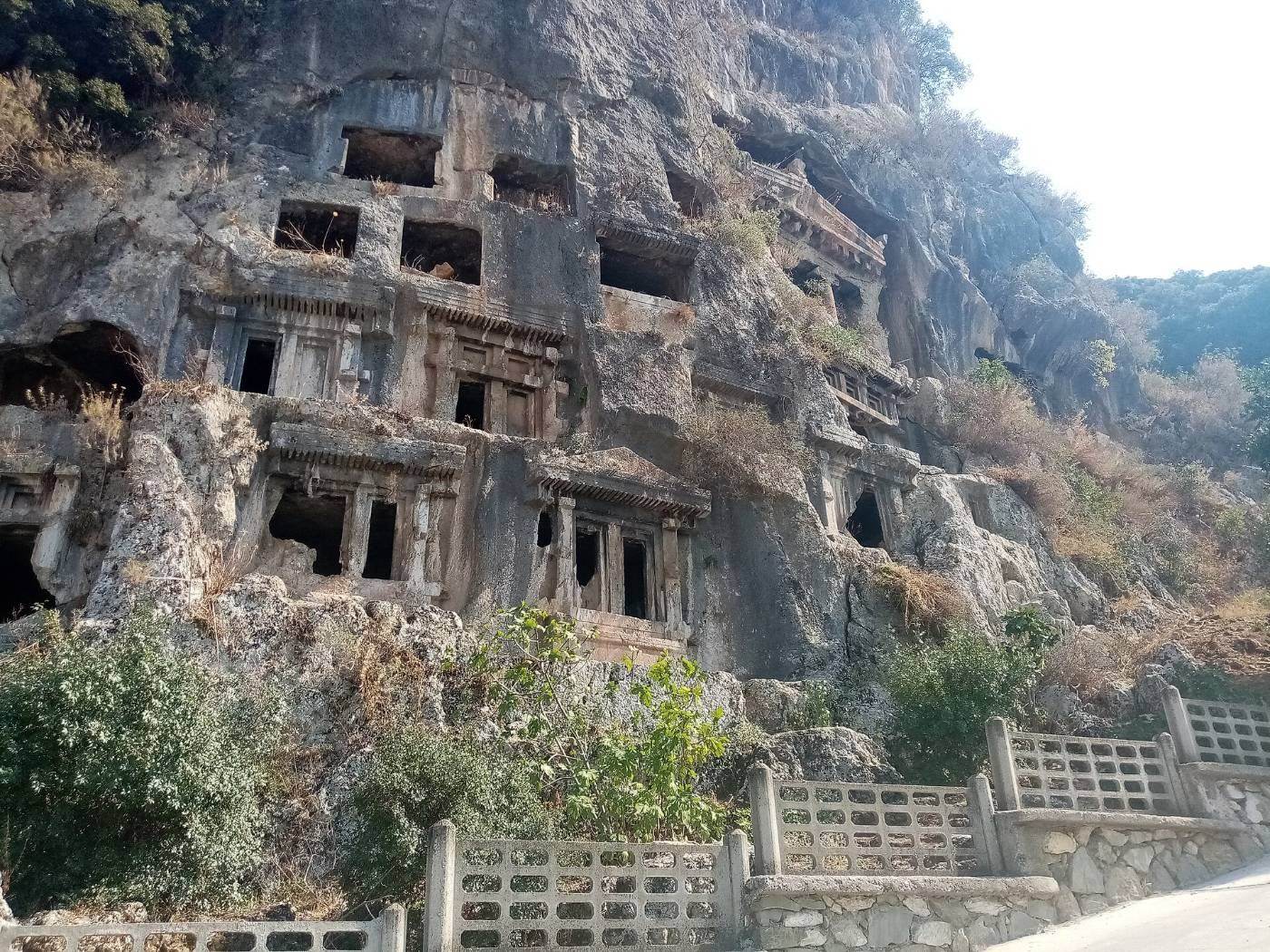 Photo: Harald the Bard · CC BY-SA 4.0
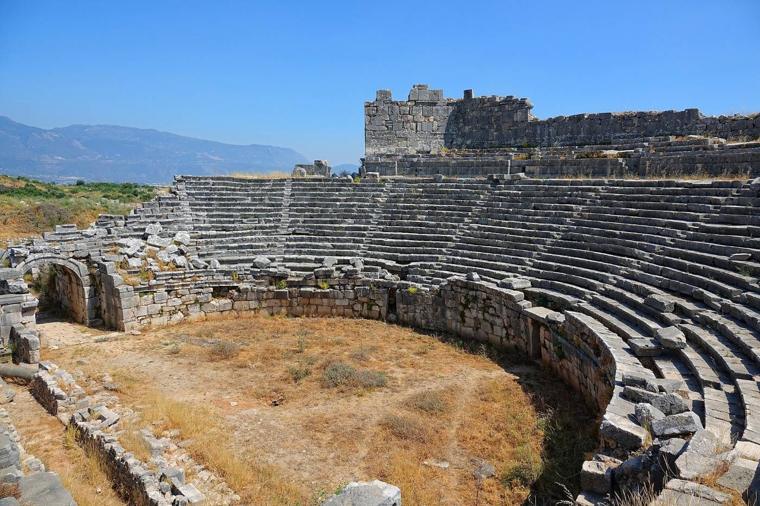 Photo: Bjørn Christian Tørrissen · CC BY-SA 4.0