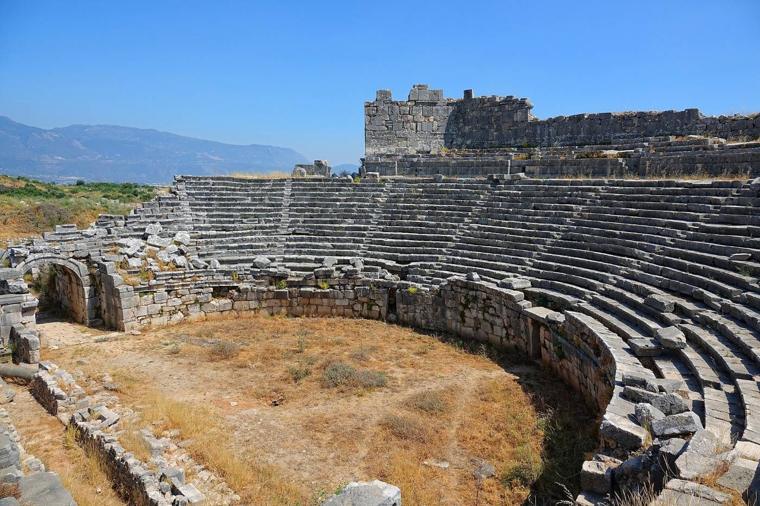
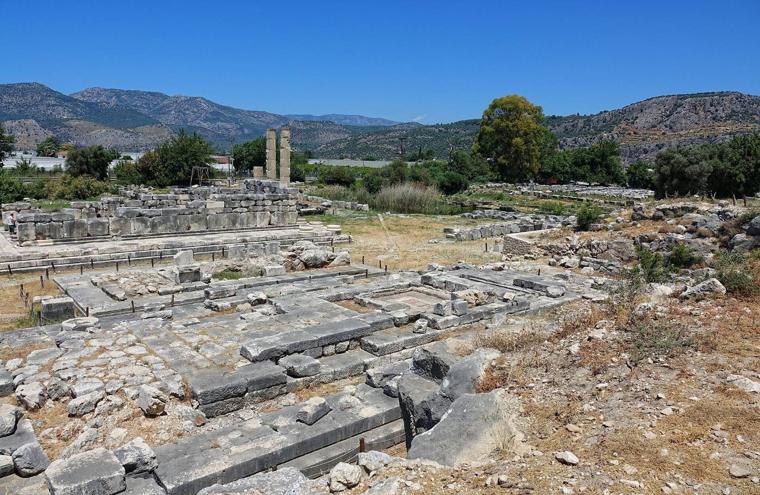
High on a ridge above Kaş, near the villages of Çukurbağ and Ağullu, Phellos rewards the effort of getting there with solitude and sweeping views over the coast and the Greek island of Meis. Unexcavated and largely reclaimed by nature, the site is scattered with Lycian sarcophagi, rock-cut tombs and stretches of city wall among olive and pine trees. It’s an atmospheric place for walkers who love discovering ruins on their own.
History
Surveys suggest that Phellos was settled as early as the 7th century BC. In the Lycian dynastic period it was one of the most important strongholds between Xanthos and Myra, and from the 5th century BC it struck its own coins bearing its Lycian name, Wehnti. Its harbour, Antiphellos, eventually outgrew it, yet Phellos remained inhabited into Byzantine times. Well over a hundred tombs bear witness to a wealthy local elite.
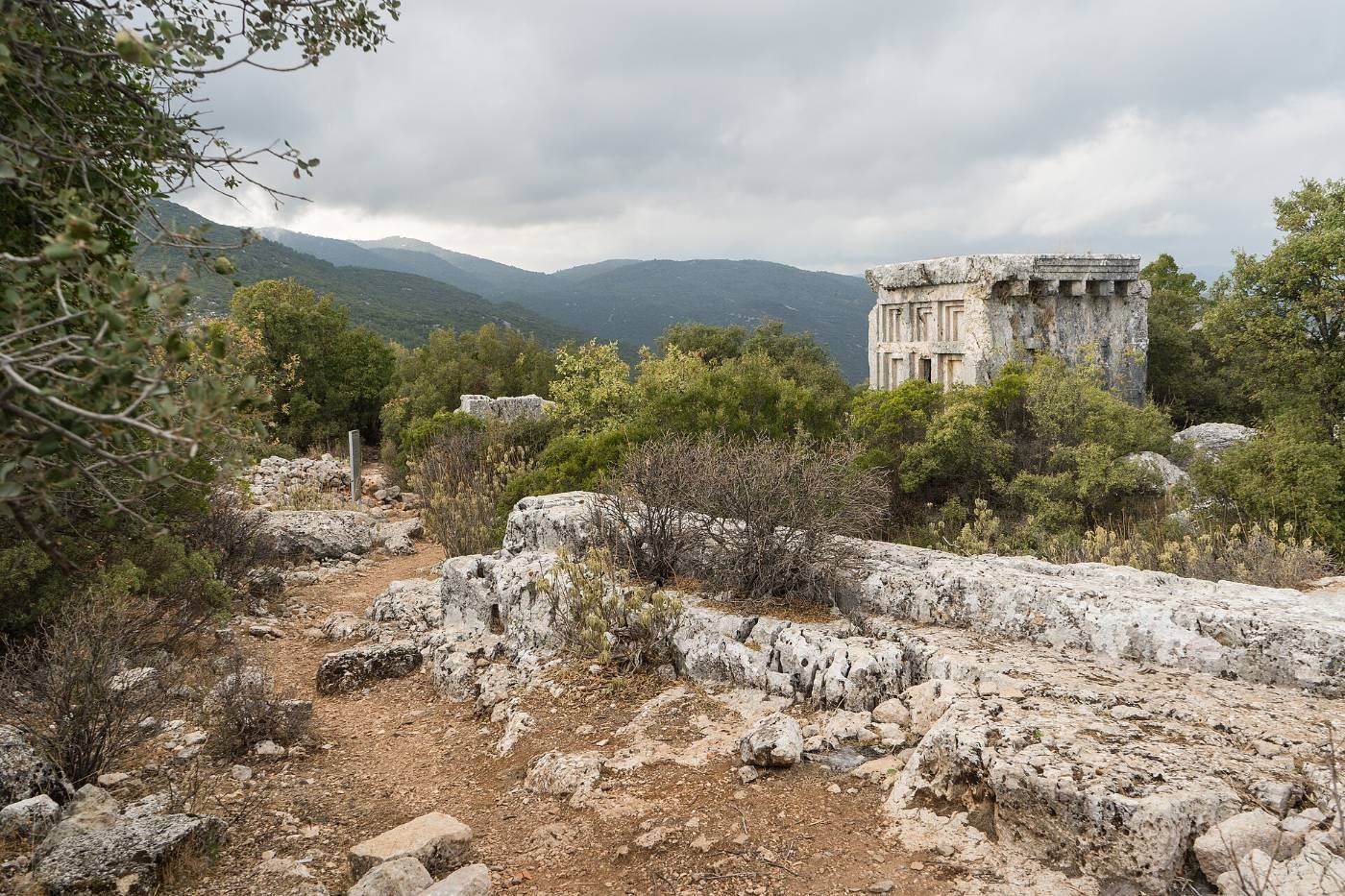 Photo: Alexkom000 · CC BY 4.0
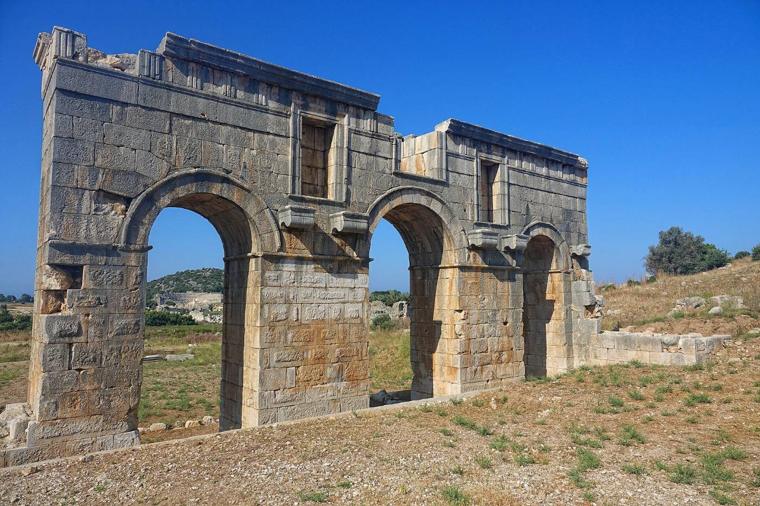 Photo: Bjørn Christian Tørrissen · CC BY-SA 4.0