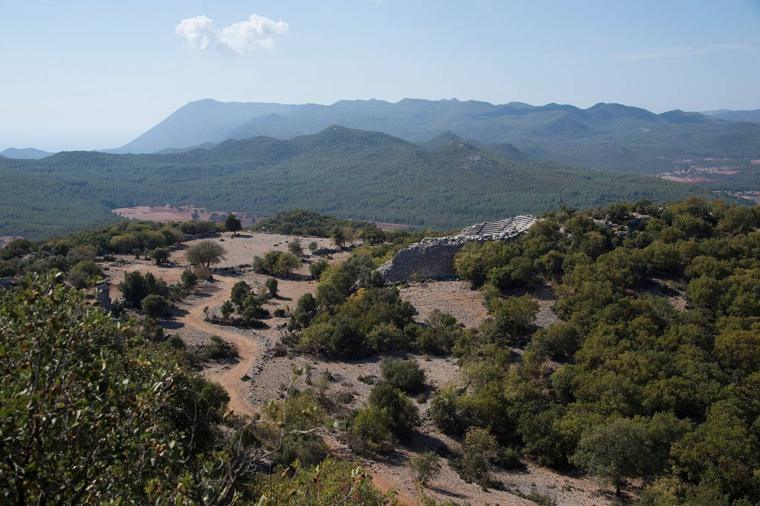
 Photo: Dosseman · CC BY-SA 4.0
Ancient~45 min
Kyaneai
Hilltop city above Yavu, called the ‘City of Sarcophagi’ for its 380+ tombs.
- Distance
- ~45 min
- Getting there
- By car
- Entry fee
- Not on the official fee list; open site
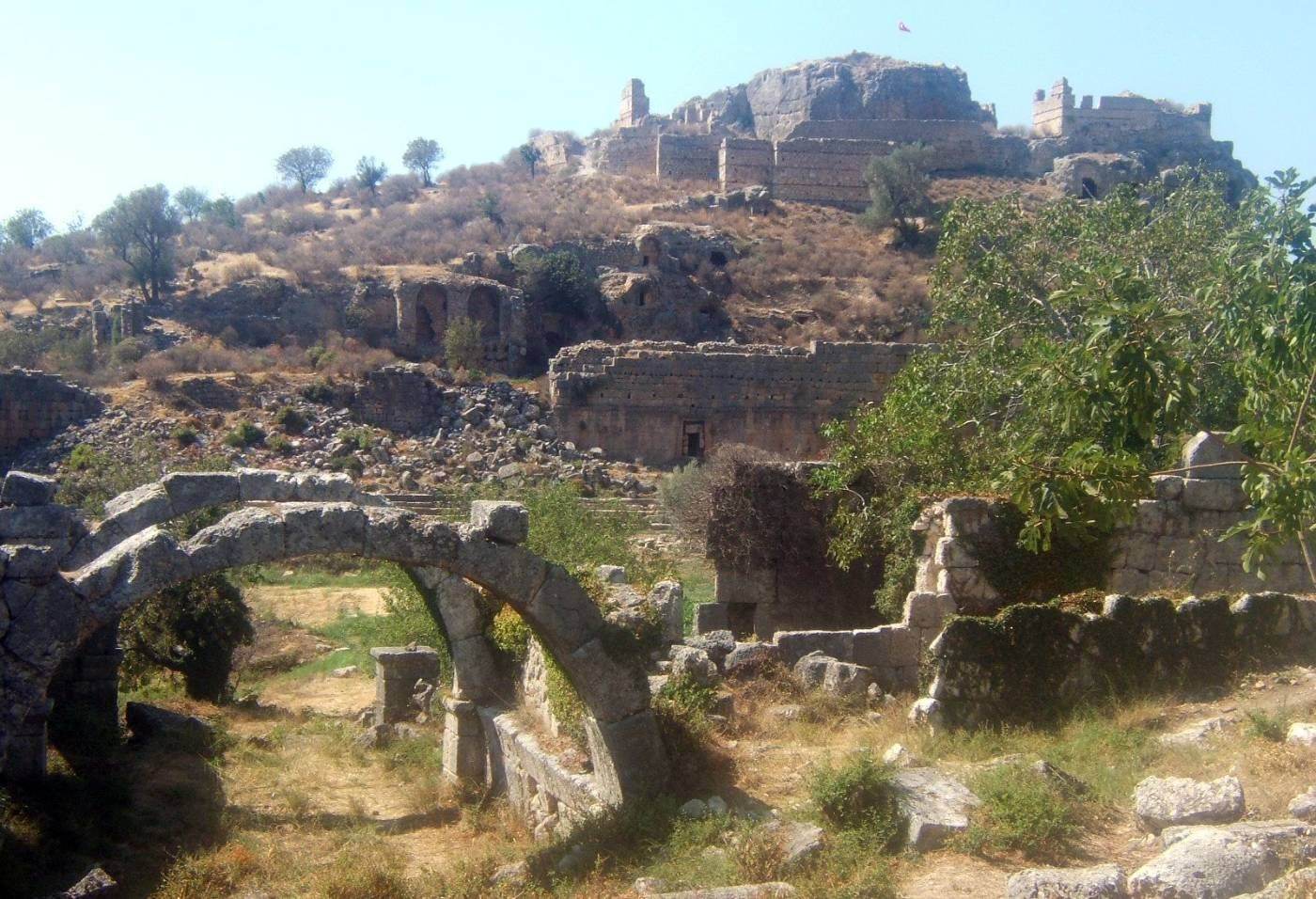 Photo: Toksave · CC BY-SA 3.0
City of the Pegasus legend; rock acropolis, stadium and Roman baths.
Tlos stands on a steep rocky outcrop overlooking the Eşen valley and the Akdağlar mountains, and is one of Lycia’s oldest and longest-inhabited cities. Temple-fronted tombs carved into the cliff, an Ottoman-era fortress crowning the acropolis, a stadium, baths and a theatre bring many ages together in a single view. Its proximity to Saklıkent Gorge makes it a perfect start to a full day out.
Scholars link Tlos with “Tlawa”, mentioned in Hittite sources, tracing its roots back to the Bronze Age. One of the six cities holding the most votes in the Lycian League, Tlos flourished in Roman times with its baths, stadium and theatre. Local tradition associates the city with Bellerophon, the legendary rider of the winged horse Pegasus. Tlos remained inhabited through Byzantine and Ottoman times, and in the 19th century the local lord Kanlı Ali Ağa built a fortress and residence on the acropolis.
Photo: Dosseman · CC BY-SA 4.0Hilltop city above Yavu, called the ‘City of Sarcophagi’ for its 380+ tombs.
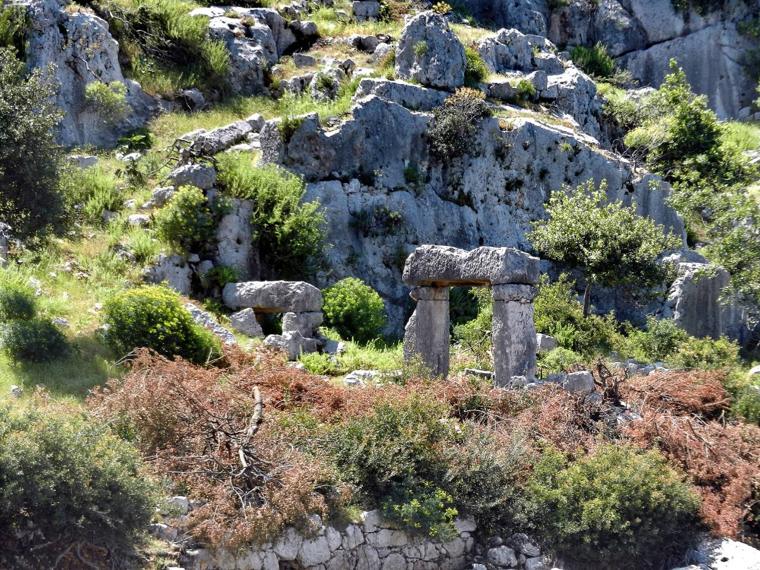 Photo: Tanya Dedyukhina · CC BY 3.0
Stairways and walls of a city sunk by a 2nd-century earthquake, visible under the sea.
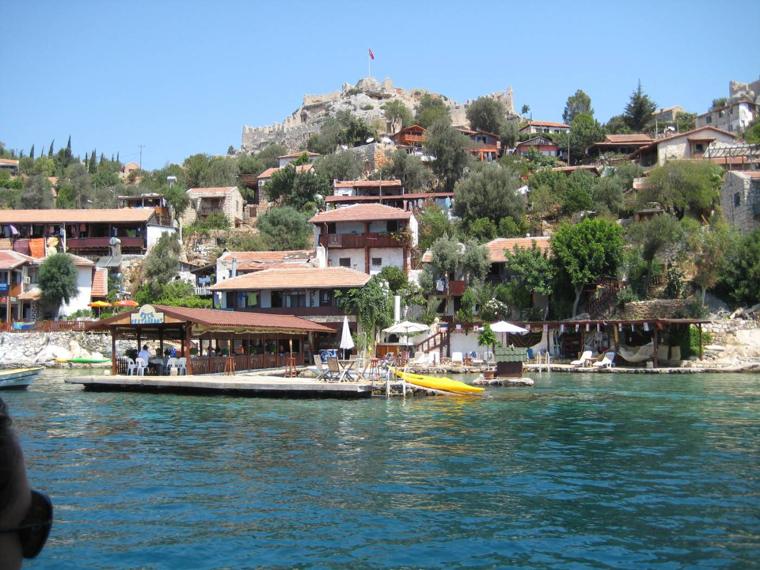 Photo: Seynaeve · CC BY-SA 3.0
A roadless village reached by boat: a castle above, a half-sunk sarcophagus in the sea.